
This guide introduces Uluru for visitors planning a day in the Red Centre. It covers the name, the landscape around it, why it matters to Anangu, and how to visit with respect. It doesn’t describe what any particular tour includes. For that, see our planning checklist.
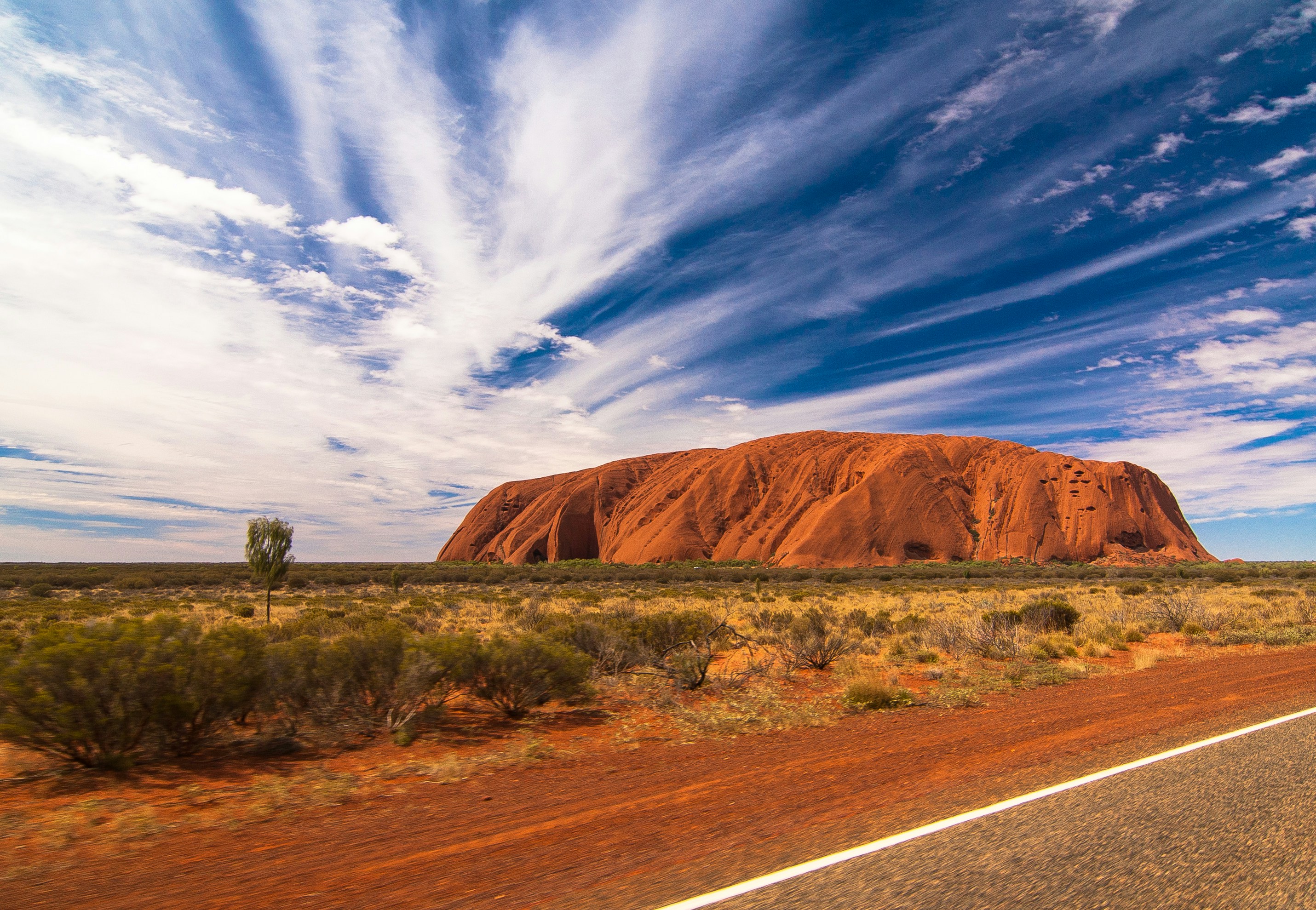
Ayers Rock is the secondary name.
Uluru is the Anangu name for the great rock in the south-west of the Northern Territory. You’ll still see Ayers Rock on maps, road signs and booking pages, and the two names refer to the same place. Across this website we use Uluru first and give Ayers Rock only as a secondary reference, so you can recognise it wherever you’re searching.
The same applies to the nearby domed rock formations of Kata Tjuta, which you may also see listed as the Olgas. If you’re curious about them, our Kata Tjuta background guide covers the basics. Whether a particular day tour visits Kata Tjuta is something to confirm before you book.
Source: Parks Australia

a landscape, not a single viewpoint.
Uluru rises from a wide plain of red sand, spinifex and desert trees in Central Australia. Up close, the rock face is weathered into ridges, hollows and caves, and the vegetation at its base changes the feel of the place compared with the view from a distance.
Light and weather change how Uluru looks across the day, which is why so many visitors plan around early or late light. Those conditions are never guaranteed. Our guide to sunrise, sunset and conditions explains what to expect, and The Red Centre: Landscapes Around Uluru covers the wider country.
Anangu are its Traditional Owners.
Uluru sits within Uluru-Kata Tjuta National Park, which is jointly managed by Anangu Traditional Owners and Parks Australia. The park is World Heritage listed for both its natural and cultural values. Read more on our Uluru-Kata Tjuta National Park page.
Source: Parks Australia
Uluru has deep cultural significance for Anangu. We’re a tour specialist, not a cultural authority, so for cultural information we point you to Parks Australia and the park’s own cultural centre. Our Respecting Anangu Culture and Country guide has practical pointers.
Source: Parks Australia
and follow the park’s rules on the day.
Don’t climb. Climbing Uluru has been closed since October 2019, in line with the wishes of Anangu.
Watch for photography signs. Some parts of Uluru are culturally sensitive, and photography isn’t permitted there. Signs show where.
Stay on marked tracks. This protects the country and the sites around the base of the rock. Tracks can close, so check their current status with Parks Australia before you go.
Check park entry. Entry to the park is managed by Parks Australia. Check the current requirements with them, and confirm whether your tour includes park entry or not.
Commercial tours in the park generally need permits and must follow Parks Australia regulations, including respect for Anangu cultural heritage.
Source: Parks Australia
Check what each day tour includes first.
We specialise in one-day Uluru tours, so you can see Uluru without organising a multi-day trip. Inclusions vary from tour to tour. Before you book, confirm whether the option covers Kata Tjuta, sunrise or sunset viewing, park entry, meals or transfers, and who operates the tour on the day. Our planning checklist walks you through it.